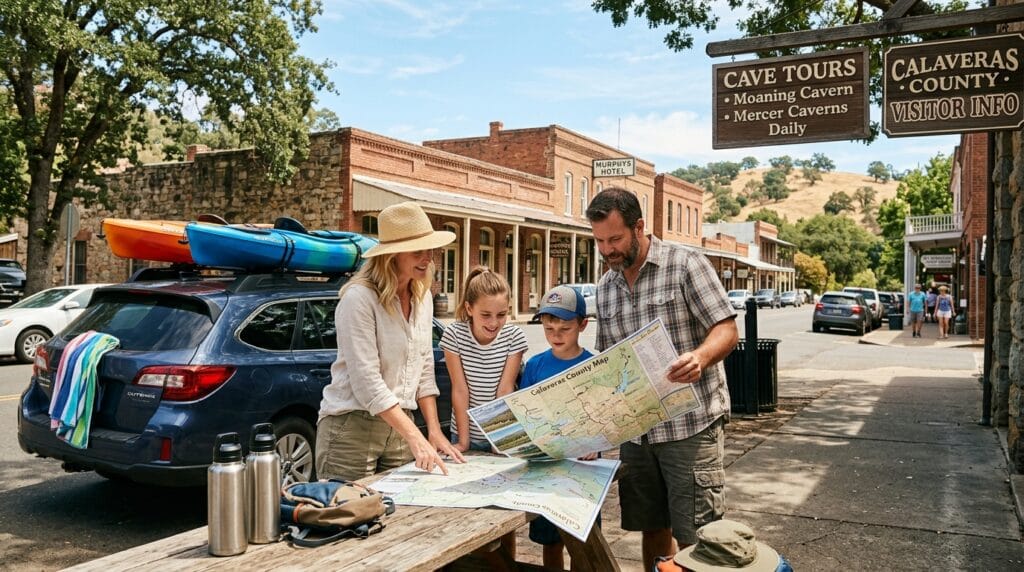

Calaveras Big Trees in spring 2026 is one of the strongest seasonal topics this site can publish right now. It fits Calaveras County perfectly because it combines giant sequoias, easy hiking, spring color, Highway 4 travel, and the kind of slower outdoor experience that many visitors actually want. Some county trips are built around one event date. This one is built around a spring window that gives travelers a real reason to visit now.
That timing matters. Spring at Calaveras Big Trees feels different from summer. The forest is fresher, the temperatures are usually better for walking, and the park has one of the county’s prettiest seasonal details: blooming dogwoods under giant sequoias. That contrast is what makes the park so visually strong in spring. You get massive trunks, softer light, greener understory, and a trail experience that feels scenic without demanding an extreme effort.
This topic also works well with the content already on your site. If readers want to turn a nature stop into a fuller weekend, they can also use your Spring Road Trip Through Calaveras County guide. If they want a more relaxed Murphys pairing, your Spring Wine Weekend 2026 in Calaveras County post already gives them a second angle. And if they are planning a May trip, your Calaveras County Fair & Jumping Frog Jubilee 2026 Guide can help them build a broader itinerary.
Why Calaveras Big Trees Is Such a Strong Spring Trip in 2026
Some destinations work best only in peak season. Calaveras Big Trees is not one of them. Spring is one of the smartest times to visit because it gives travelers the giant sequoia experience without forcing them into the busiest summer pattern. That matters for readers who want something scenic and memorable without needing an all-day mountain expedition.
Spring Changes the Feel of the Park
The biggest difference is not only the weather. It is the mood. In spring, the park feels more layered. The sequoias are always the headline, but the dogwoods, fresher greenery, and cooler walking conditions make the whole place feel more inviting. For first-time visitors, that is a big advantage. The park feels impressive right away, but it also feels approachable.
Dogwoods make the North Grove especially appealing
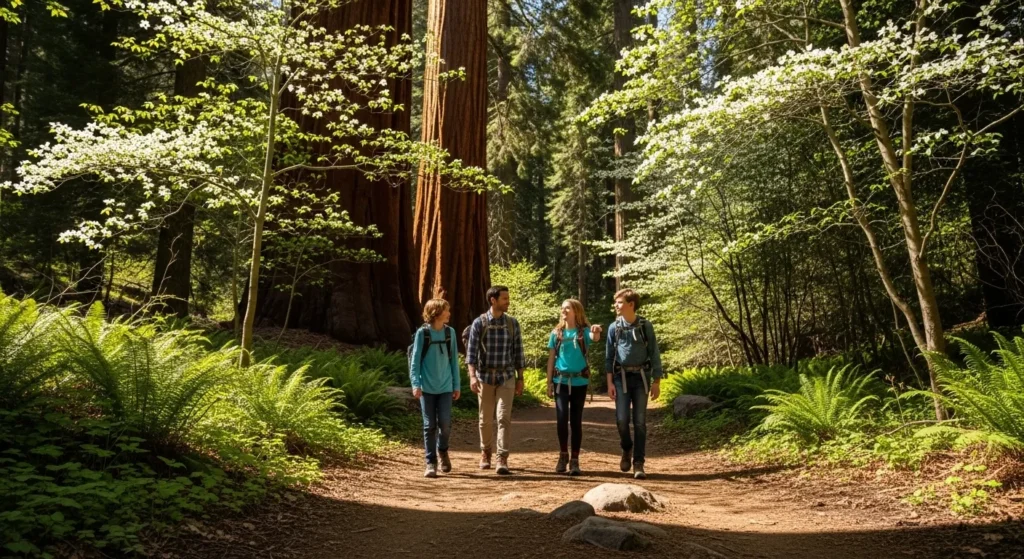
One of the best reasons to publish this topic now is that spring bloom is a real local draw. Dogwoods typically become part of the park’s visual appeal during the spring season, and that makes the most popular trail feel even stronger for casual visitors. Instead of selling only “big trees,” this post can sell a more complete spring scene.
That matters because a lot of travel content about giant sequoias gets lazy. It acts as if the trees alone are enough. They are impressive, obviously, but better travel writing explains why a certain season improves the visit. In spring, Calaveras Big Trees has more texture. You are not just looking up at trunks. You are moving through a forest that feels alive, colorful, and seasonally specific.
The easiest win is the North Grove Trail
The North Grove is one of the park’s smartest entry points because it gives visitors a lot of reward without making the day complicated. It is the trail you can recommend to a mixed group without worrying too much. Families, casual walkers, photographers, and people doing a broader county day trip can all use it well.
That is a major SEO advantage too. It means this article can rank not just for sequoia interest, but for spring hiking, easy hikes, family travel, and day-trip planning around Arnold. The more practical the page is, the more useful it becomes after the first click.
It Works Better When Visitors Treat It as Part of a Weekend
A mistake some travelers make is treating Big Trees like a quick checkbox stop. That sells the county short. The better approach is to use the park as one major anchor inside a broader Calaveras County weekend. That could mean pairing it with Murphys, scenic Highway 4 driving, or one of the county’s historic-town and cave stops.
This is exactly where your site already has useful internal link opportunities. A reader who wants a wider loop can move into your road trip guide. A reader who wants a softer spring pairing can move toward Murphys and wine country. A reader visiting in mid-May may want to connect the park visit with fair-season travel in Angels Camp. One post should support the next. That is how a county site starts to feel complete.
Arnold is the practical base for this side of the county
For many visitors, Arnold makes the most sense as the working base for a Big Trees trip. It keeps the day simpler, especially for travelers who want easy access to the park without overbuilding their route. From there, the trip can expand or stay relaxed depending on the weather, trail energy, and time of year.
This is one reason Big Trees is such a smart spring article for your site. It supports the county’s outdoor identity, but it does not force the writing into hard-core hiking language. You can sell the experience to both hikers and non-hikers, which is exactly what a strong local travel site should do.
How to Plan a Better Big Trees Visit This Spring
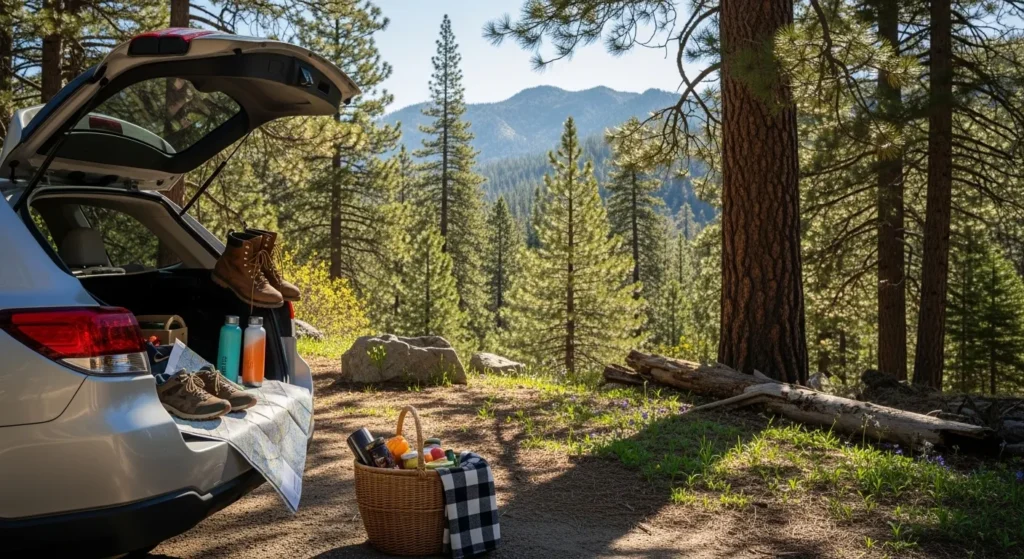
The best version of this trip is simple. Check current park conditions. Build around the trails and access that make sense now. Then leave enough room for the county to feel enjoyable instead of overpacked. Spring in the Sierra foothills usually rewards travelers who stay flexible.
Start With Current Conditions, Then Build the Day
Before readers leave home, they should check the official park page rather than relying on old assumptions. Seasonal access shifts matter here. So do weather changes, campground timing, and road-related expectations. The point is not to make the trip sound difficult. The point is to keep it real.
Check the official park page before you go
The most useful external source for this article is the official Calaveras Big Trees State Park page. That is where readers should confirm hours, current restrictions, fees, camping information, maps, and any park-specific updates. If the day depends on deeper spring access, they should also pay attention to seasonal timing beyond the easiest core areas.
A smart spring article should be honest about this. Do not promise a full high-country summer experience in April if shoulder-season realities still matter. Instead, tell readers what to do: build the trip around confirmed access, use the North Grove as the easy default, and treat any larger add-on as a bonus if conditions line up.
For readers who want a stronger weekend, one simple structure works well:
- start with the park in the morning while temperatures are cooler;
- use the North Grove as the must-do walk if the group is mixed;
- add a second stop only if energy and timing still feel good;
- pair the day with Murphys, Arnold, or a scenic Highway 4 drive instead of forcing too much into one itinerary.
This is also where your existing posts help. Big Trees can easily connect with your spring road trip guide for travelers who want more movement, or with your Murphys wine-country content for readers who want a softer follow-up after the forest.
Bottom line: Calaveras Big Trees in spring 2026 is exactly the kind of post this site should be publishing. It is seasonal, location-specific, visually strong, useful for both hikers and casual visitors, and easy to support with internal links. More importantly, it gives the site a real nature-and-hiking pillar to balance the event and road-trip content already on the blog.