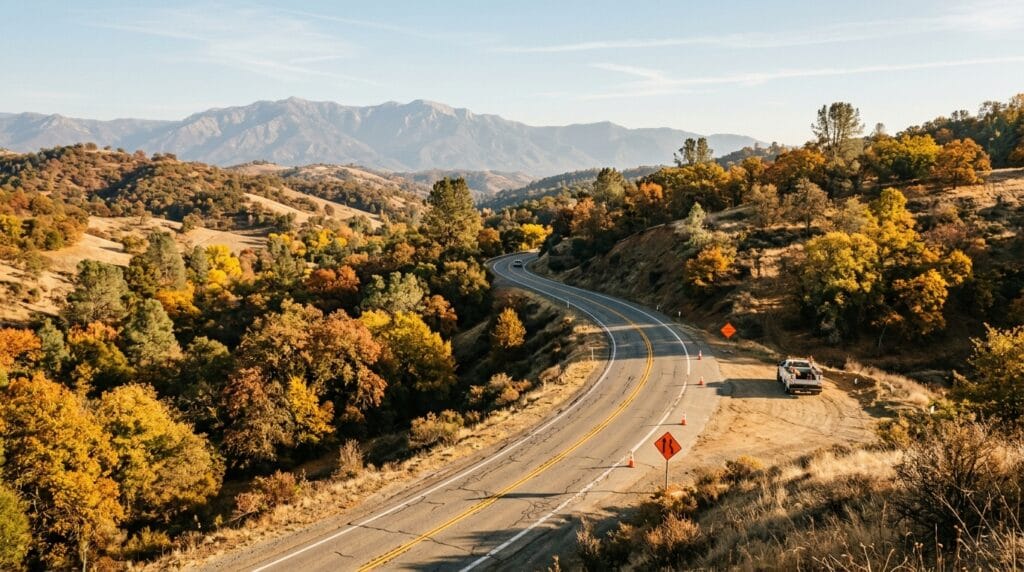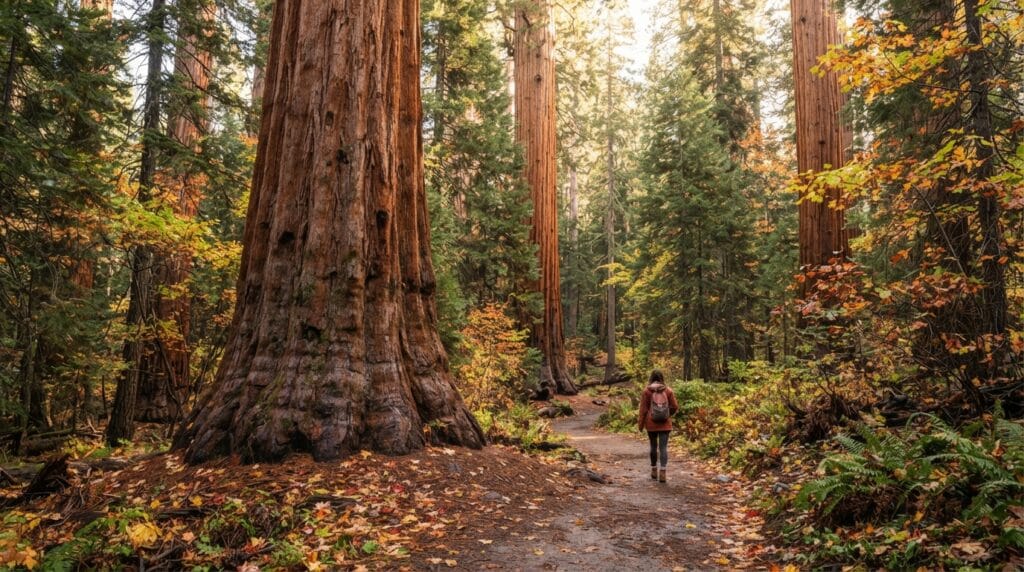

Calaveras Big Trees fall travel looks especially interesting in 2026. Cooler weather, giant sequoias, changing understory leaves, and quieter weekday trips can make October one of the most rewarding times to visit the park near Arnold.
This year also requires more planning than usual.
California State Parks has announced prescribed burning that may affect portions of the park beginning around the end of September. Construction near the visitor center is also expected to continue into at least mid-October.
Those projects do not mean travelers should automatically cancel a fall trip. However, trail access, smoke, parking, noise, and visitor-center availability may change from one day to the next.
The smartest approach is to treat a fall visit as flexible. Choose a main trail, know your backup option, check official park conditions before leaving, and avoid assuming every section of Calaveras Big Trees will be open simply because the park itself remains open.
Why Calaveras Big Trees Fall Travel Is Different in 2026
Calaveras Big Trees State Park protects two famous giant sequoia groves: the North Grove and South Grove. It also includes mixed-conifer forest, meadows, Beaver Creek, the Stanislaus River, and a larger trail network.
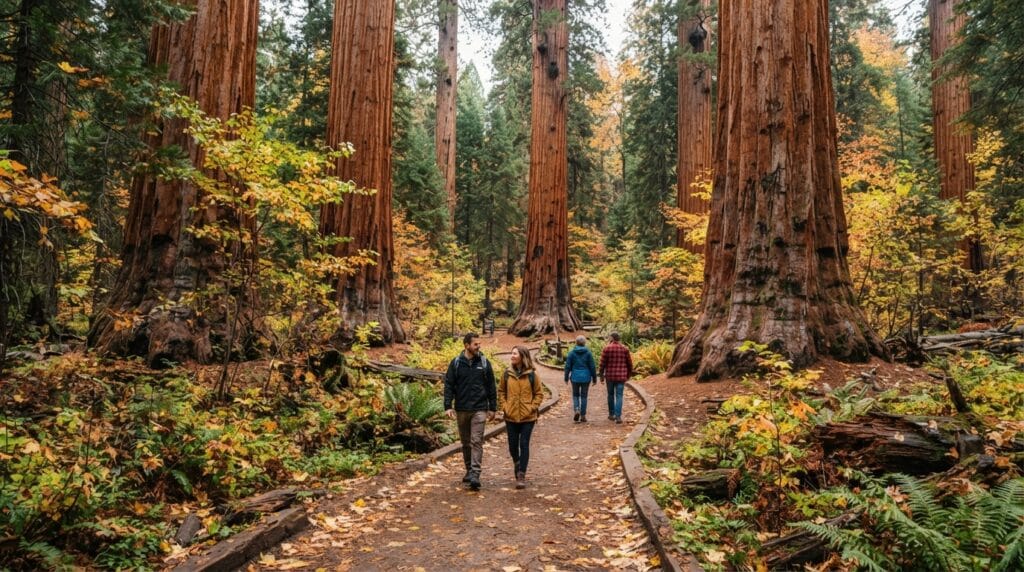
In fall, the giant sequoias remain the main attraction, but smaller deciduous trees and understory plants can add yellows, oranges, and reds to the forest.
The seasonal atmosphere is only part of the story in 2026.
Visitors also need to understand the park’s active forest-management work.
Prescribed Burns May Change Trails and Access
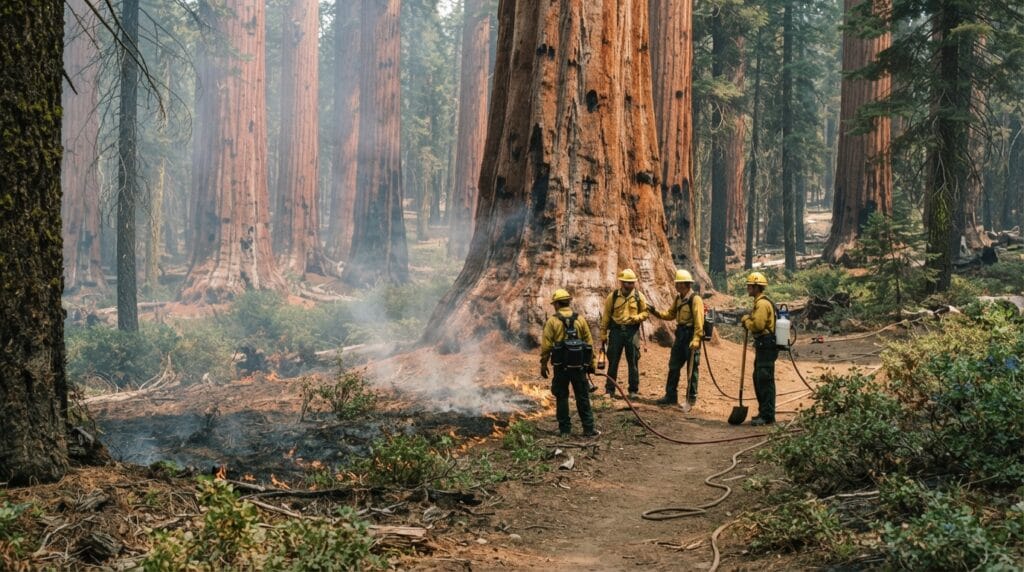
California State Parks and CAL FIRE announced plans for prescribed burns covering approximately 780 acres in Calaveras Big Trees State Park.
The planned treatment areas include portions of the South Grove area, North Grove Meadow, and West Moran.
The work depends heavily on conditions. Crews need suitable weather, vegetation moisture, and smoke-dispersal conditions before ignition can proceed.
If those conditions are not right, burning may be delayed or rescheduled.
That means a trip planned several weeks in advance may still need an access check on the morning of departure.
Several Popular Areas Could Temporarily Close
State Parks has warned that partial closures may occur during and after prescribed-fire operations.
Possible affected areas include the South Grove Trail, Beaver Creek area, Bradley Grove Trail, the fire road around South Grove, portions of Walter W. Smith Memorial Parkway south of the Stanislaus River, and West Moran Road near the park boundary.
Other temporary closures may also be added if crews need more space to conduct operations safely.
Closures can remain after ignition ends. Crews need time to monitor fire activity, inspect the area, and determine when conditions support reopening.
This makes it especially important to avoid building an entire trip around one specific South Grove route without a backup.
If this is your first visit, our guide to giant sequoia hikes in Calaveras County can help you compare the North Grove, South Grove, Bradley Grove, and shorter alternatives before deciding what fits your group.
Prescribed-Fire Smoke Is Different From an Unplanned Wildfire
Seeing smoke near a forest can immediately make visitors nervous, especially after several severe California wildfire seasons.
Prescribed burns are planned differently.
Fire crews use controlled burning as a forest-management tool. At Calaveras Big Trees, State Parks says the work helps reduce hazardous fuel, improve forest resilience, restore nutrients, support wildlife habitat, and encourage giant sequoia regeneration.
Large sequoias in treatment areas may also receive preparation around their bases so heavy fuels and organic material are less likely to create damaging fire intensity.
Smoke can still affect a visit.
Communities around Arnold, Dorrington, Big Trees Village, White Pines, Blue Lake Springs, and Love Creek may notice smoke during operations. Smoke can remain in the area for some time after active firing ends.
If anyone in your group has asthma or another condition affected by smoke, check air quality before committing to a long hike.
Our Calaveras County wildfire and smoke travel guide also explains how to build backup activities into a foothill trip when outdoor conditions change.
Visitor Center Construction Adds Another Planning Detail
Prescribed burning is not the only active project this fall.
California State Parks has also reported construction around the visitor-center area.
The work may create daytime noise and reduce available parking. Construction was expected to continue through at least mid-October.
Minor roadwork was also scheduled through approximately the end of September, with the possibility of temporary traffic control or brief closures.
Because project schedules can change, visitors arriving in early October should still verify current conditions before assuming all roadwork is complete.
October 14 Has a Specific Visitor Center Closure
Travelers planning a Wednesday, October 14 visit should know about one additional issue.
California State Parks has announced that the visitor center is scheduled to close that day because of a planned localized power outage.
The park itself may still offer outdoor recreation, but visitors should not build that day’s itinerary around normal visitor-center services.
Bring the information you need before arriving. Save trail maps to your phone, carry water, and know which route you want to use.
Normal fall visitor-center hours are shorter than summer hours as well, so arriving early remains a good strategy.
The park’s day-use area generally operates from sunrise to sunset.
How to Plan a Calaveras Big Trees Fall Trip in 2026
The best fall trip starts with flexibility rather than a packed schedule.
Choose one major park activity and leave enough room to change plans if smoke or a closure affects your preferred trail.
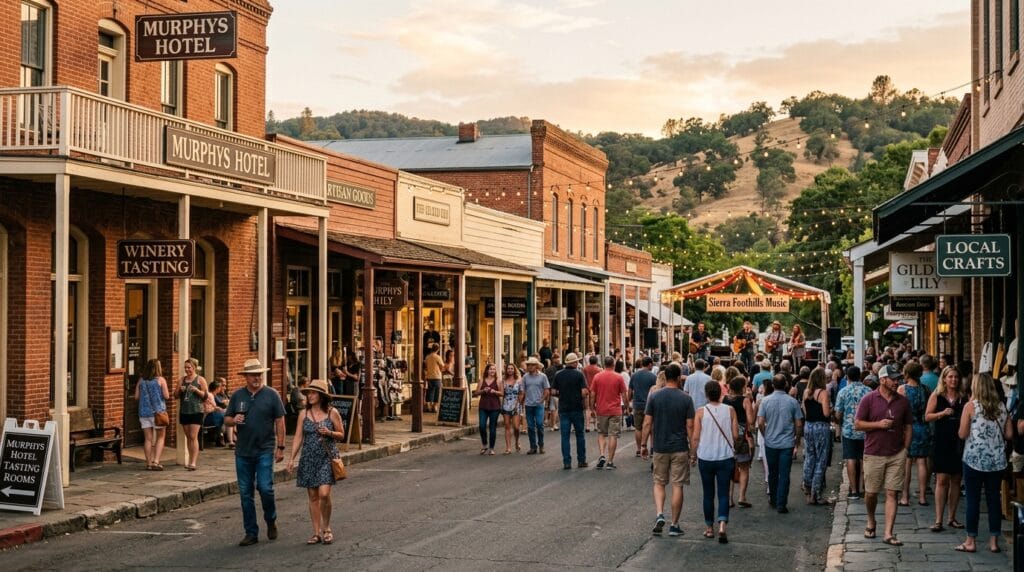
For many visitors, a morning at Big Trees followed by a slower afternoon around Arnold, Murphys, or another Highway 4 stop works better than trying to fit several demanding hikes into one day.
Fall also brings shorter daylight hours and cooler conditions, so an early start gives you more options.
Choose a Flexible Trail Plan and Check Conditions Before Driving
The North Grove is usually the easiest place for first-time visitors to begin.
Its location near the main visitor area makes it easier to fit into a shorter visit, and the mostly level loop gives travelers a strong giant-sequoia experience without committing to the longer South Grove outing.
However, visitors should still check current conditions. Prescribed-fire operations include the North Grove Meadow area, so access or smoke conditions may change.
The South Grove offers a longer and more immersive forest experience, but its location makes it more vulnerable to the announced burn-related closures.
If South Grove is a major reason for your visit, confirm its status shortly before driving to the park.
The Best Backup Plan Is Another Good Calaveras County Experience
A temporary trail closure does not have to ruin the day.
Calaveras County gives visitors several strong alternatives close enough to pair with Big Trees.
You might spend more time around Arnold, continue toward a scenic Highway 4 stop when road conditions allow, explore Murphys, visit a tasting room, or build a shorter forest outing around an accessible area of the park.
If your main goal is still giant sequoias, the site’s Calaveras Big Trees seasonal guide provides additional background on the North Grove and ways to structure a simpler park visit.
Bring layers in fall. Mountain temperatures can change quickly between morning and afternoon, especially in shaded forest.
Comfortable shoes also matter. Fallen leaves, wet areas, roots, and uneven trail surfaces can make an otherwise easy walk more demanding.
Carry water even when temperatures feel cool. Longer hikes still require hydration, and some trail areas do not have drinking water nearby.
Visitors traveling with dogs should also understand the park’s pet restrictions. Dogs are allowed in campgrounds and on fire roads but not on most hiking trails, including the primary grove trails.
Parking deserves extra patience this fall because construction near the visitor center may reduce capacity. Weekend travelers should arrive earlier when possible and avoid creating parking spots along roads or restricted areas.
Most importantly, check the official park page on the day of your trip. Prescribed-fire closures are based on real-time conditions, not a fixed tourist calendar.
California State Parks currently lists the prescribed burn and construction work as active advisories. Use the official Calaveras Big Trees State Park website before leaving home to confirm the newest trail, road, smoke, and visitor-service information.
Fall remains a beautiful time to experience the park.
The giant sequoias provide the scale visitors come to see, while changing understory leaves can add seasonal color around the massive evergreen trunks. Cooler temperatures may also make walking more comfortable than during hot summer afternoons.
The difference in 2026 is that successful Calaveras Big Trees fall travel requires checking conditions first.
A trail that is open one weekend could be temporarily affected by forest-management work later. Smoke may appear even though there is no uncontrolled wildfire. Parking could be more limited near the visitor center. One planned power outage will also affect visitor-center access on October 14.
None of those details should overshadow the reason people visit.
Calaveras Big Trees remains one of the Sierra foothills’ most memorable places to walk among giant sequoias.
Build flexibility into the itinerary, respect temporary closures, check current conditions, and let the forest determine the pace of the day.
That approach makes a fall trip easier for visitors while giving crews the space they need to continue work designed to protect the park for future seasons.